
Wine Tank Temperature Control Checks That Improve Fermentation Stability
Why Temperature Control Checks Matter in Modern Fermentation
Fermentation stability is one of the most closely watched factors in winery operations because small temperature deviations can change yeast behavior, alter extraction patterns, and increase the likelihood of inconsistent batch outcomes. In many wineries, the issue is not simply whether cooling equipment exists, but whether temperature control is being checked in a disciplined, repeatable way throughout the full fermentation cycle. Practical checks help operators identify hidden variability before it turns into quality loss, downtime, or avoidable rework.
This matters across production, quality, maintenance, and technical evaluation roles. Operators need stable conditions to manage daily fermentation progress. Quality teams need confidence that temperature records reflect actual product conditions rather than sensor assumptions. Technical reviewers often compare vessel design, cooling response, and control logic when assessing process reliability. Maintenance teams need to know whether recurring instability comes from controls, insulation, valves, probes, or operating practices. Temperature management sits at the point where product quality and equipment performance meet.
In practical winery settings, temperature-related instability may appear as slow starts, uneven fermentation rates, stalled activity, excessive foam, aroma loss, or higher-than-expected variation between tanks filled with similar must. These symptoms often develop gradually. By the time a problem is obvious, the opportunity for easy correction may already be narrowing. That is why structured checks are valuable: they turn temperature control from a reactive task into a controlled routine.
Where Fermentation Instability Usually Begins
Many temperature problems start with assumptions that seem reasonable during busy harvest periods. A displayed tank temperature may be treated as equal to the true liquid temperature everywhere inside the vessel. Cooling jackets may be assumed to respond uniformly, even when flow conditions differ from one zone to another. A control system may show no alarm, yet the process may still be drifting because probe placement, calibration drift, or poor circulation is masking the real condition inside the tank.
Wine fermentation is especially sensitive because biological activity generates heat unevenly. Large volumes can develop internal differences between upper and lower sections, or between the area near the cooling surface and the center mass. In red fermentations, cap formation can add another layer of complexity by affecting heat distribution and contact. In white and rosé processing, tighter temperature targets may make even modest control lag more important. What looks like a minor deviation on a screen can have a larger effect on yeast stress, aroma retention, and timing than expected.
The risk grows when tank turnover is high and several vessels are running simultaneously. In that environment, stable performance depends less on occasional troubleshooting and more on routine verification. Wineries that rely only on final outcomes may miss the process signals that explain why one tank performed well and another did not.
Practical Checks That Improve Temperature Control Stability
The most effective checks are usually simple, but they need to be consistent. They should confirm not only the displayed setpoint, but the actual thermal behavior of the fermentation system under production conditions.
- Verify sensor accuracy before peak production periods. Temperature probes should be checked against a known reference on a defined schedule. Even a small offset can influence fermentation decisions if operators are adjusting cooling based on inaccurate data.
- Review probe location and immersion depth. A correctly functioning sensor can still provide misleading information if it is installed where flow is poor or where it mainly reflects wall temperature rather than bulk liquid temperature.
- Confirm jacket performance by zone. Multi-zone cooling systems should be checked to ensure each section responds as intended. Uneven performance between upper and lower jacket areas can create gradients that are not visible from a single reading.
- Track temperature response time after control changes. If there is a long delay between adjustment and process response, operators may overcorrect. Recording response patterns helps teams distinguish normal lag from a developing equipment issue.
- Inspect glycol flow conditions and valve behavior. Stable tank temperature depends on a stable cooling medium. Restricted flow, sticky valves, or inconsistent supply temperature can all reduce control precision.
- Check insulation and external heat gain. In warm environments, insulation damage or poor installation details may increase load on the cooling system and make temperature drift more likely during active fermentation.
- Compare displayed values with actual fermentation behavior. If sugar reduction, yeast activity, or heat generation patterns do not match expected temperature readings, the process deserves closer review rather than blind trust in the display.
Operational Impact for Different Winery Roles
For operators, disciplined temperature checks reduce the need for emergency intervention. A tank that remains within expected thermal limits is easier to manage, especially during high-volume intake periods when staff attention is stretched. Better control also supports more predictable pump-over timing, nutrient additions, and fermentation completion planning.
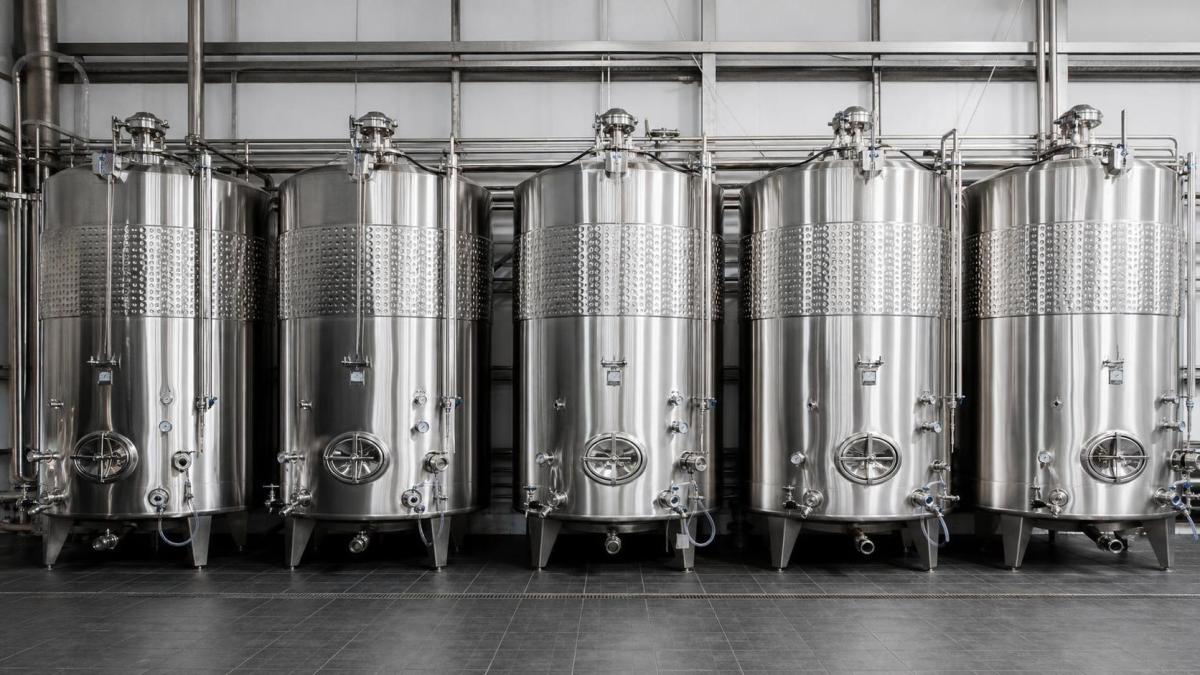
For technical evaluators, temperature control performance is a useful way to assess whether a vessel is suited to the winery's process needs. Beyond nominal capacity, they often need to look at cooling surface arrangement, control integration, material consistency, cleanability, and maintenance access. In that context, wine tanks are not simply storage vessels but active process assets whose thermal behavior can influence both product quality and production efficiency over time.
For quality and safety personnel, stable control supports traceability and process confidence. A documented temperature history can help explain sensory differences, confirm that operating parameters stayed within internal targets, and reduce uncertainty when investigating nonconforming lots. While every winery has its own standards, temperature records often become more valuable when they are paired with calibration logs and routine inspection findings.
For maintenance teams, repeated instability is often a signal that should be classified and trended, not treated as an isolated incident. A recurring need for manual adjustment may point to control tuning issues, fouling in the cooling circuit, declining valve performance, or sensor drift. Early identification can reduce downtime during the busiest production window.
What Procurement and Engineering Teams Should Review
When wineries evaluate equipment for fermentation stability, purchase decisions should extend beyond volume and basic material specifications. Temperature control performance depends on how well the tank design supports the actual process. That includes the relationship between vessel geometry, cooling jacket coverage, control instrumentation, and the expected fermentation style.
Engineering and procurement teams can focus on a few practical questions:
- Is the cooling arrangement appropriate for the batch size and heat load likely during peak fermentation?
- Can sensors be inspected, calibrated, and replaced without unnecessary disruption?
- Does the control setup support accurate monitoring rather than simple on-off reaction?
- Are weld quality, surface finish, and cleaning access likely to support long-term hygiene and thermal consistency?
- Will the tank integrate well with the winery's existing glycol and control infrastructure?
These questions are especially relevant for larger-capacity systems, where thermal inertia can make response slower and process deviations harder to correct quickly. A vessel that looks sufficient on paper may still create operating difficulty if the cooling design is not well matched to fermentation reality.
Common Mistakes That Weaken Temperature Control
One common mistake is treating temperature control as a single-point measurement issue rather than a whole-system performance issue. Another is assuming that if fermentation finishes, the thermal regime must have been acceptable. In practice, completion alone does not confirm stability, consistency, or quality optimization.
Wineries may also underestimate the effect of delayed maintenance. Minor valve sticking, incomplete cleaning of thermal exchange surfaces, or neglected sensor verification can gradually reduce control reliability. During lower production periods, these issues may appear manageable. During harvest, they often become more visible because system demand rises sharply.
A further mistake is separating equipment evaluation from process review. Tank performance should be assessed together with operating practice. Even a well-designed system may struggle if fill levels, mixing routines, setpoint changes, or cooling schedules are inconsistent. Strong outcomes usually come from aligning equipment capability with clear operating discipline.
Execution Priorities for Wineries
For wineries looking to improve fermentation stability without overcomplicating operations, a short list of execution priorities is often enough to create measurable gains. First, standardize pre-season checks for probes, valves, glycol flow, and jacket response. Second, define acceptable temperature deviation ranges for different wine styles and fermentation stages. Third, require operators to log not just readings but unusual response patterns, especially after manual changes. Fourth, connect maintenance findings with production records so recurring issues can be traced across batches and seasons.
Where multiple tanks are in service, comparison between vessels can be particularly useful. If one tank repeatedly needs more intervention than others under similar conditions, that difference may indicate a design, control, or maintenance issue worth investigating. This type of internal benchmarking often gives wineries a more practical decision basis than relying on assumptions alone.
Conclusion
Temperature control checks are not just a technical routine. They are part of how wineries protect fermentation consistency, reduce avoidable variation, and make better use of equipment investment. In many cases, improved stability comes less from adding complexity and more from checking the right points with discipline: sensor accuracy, response time, jacket function, cooling flow, and alignment between displayed data and real fermentation behavior.
For operators, quality teams, technical reviewers, and maintenance personnel, the value is practical. Better checks can support steadier fermentations, clearer troubleshooting, and more confident equipment decisions. In a production environment where small thermal errors can influence larger outcomes, that level of control is often worth sustained attention.
Get weekly intelligence in your inbox.
No noise. No sponsored content. Pure intelligence.
