
Laser Technology Upgrades That Improve Output, Not Just Specs
In life sciences and laboratory equipment environments, laser technology upgrades matter only when they improve real output—faster analysis, sharper microscopic imaging, and more reliable results across IVD, POCT, immunoassays, antibodies research, and cell cultures. For buyers, operators, and technical evaluators, the real question is not who offers better specs, but which systems deliver measurable gains in precision, throughput, safety, and decision-making value.
That distinction is especially important in laboratories where laser-based subsystems are embedded inside imaging platforms, flow analysis tools, spectral instruments, alignment modules, and automated diagnostic workflows. A stronger wavelength specification or higher power rating may look impressive in a datasheet, but output in real laboratory settings depends on signal stability, integration quality, thermal control, software coordination, and maintainability over months of routine use.
For organizations evaluating upgrades in precision optics and imaging science, the most useful framework is practical: does the upgrade reduce repeat scans, improve contrast at lower exposure, shorten turnaround by 10%–30%, or lower operator intervention per batch? In B2B purchasing and technical review, those are the gains that justify investment.
Why Output-Based Laser Upgrades Matter More Than Headline Specifications
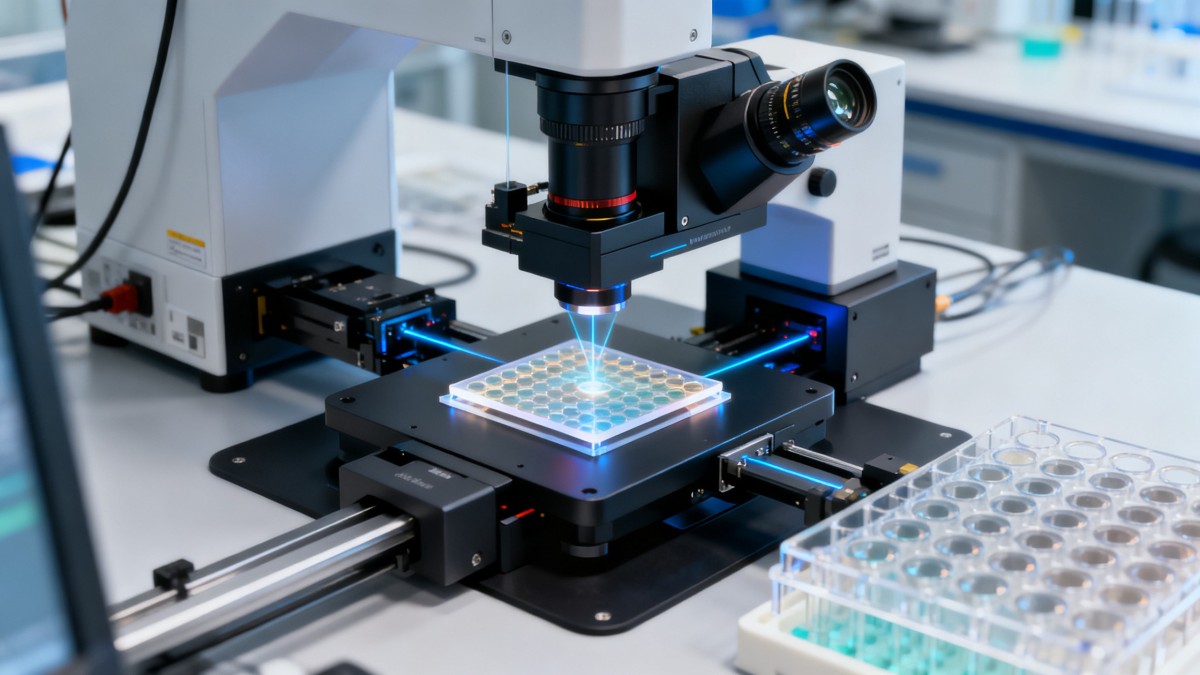
In laboratory and bioscience environments, laser technology sits at the intersection of optics, automation, sample integrity, and data confidence. A specification-led purchase often focuses on beam power, wavelength, or scan speed alone. However, production output in imaging, diagnostic screening, or analytical workflows is shaped by a broader set of conditions, including drift resistance, optical alignment repeatability, detector matching, and software-controlled consistency across 8-hour to 24-hour operating cycles.
For example, in fluorescence imaging or spectral analysis, a modest upgrade in power stability from a common ±3% fluctuation range toward a tighter ±1% operating range can have more impact on usable signal quality than a simple increase in nominal power. In cell-based assays and antibody studies, that improvement can reduce rework, improve image comparability between batches, and help quality teams maintain cleaner records during validation or audit review.
Operators also care about usability. If a laser upgrade increases sensitivity but introduces extra calibration steps every 2 to 3 hours, the net productivity gain may disappear. In contrast, systems that keep alignment stable over longer shifts, support automated calibration routines in less than 5 minutes, and integrate with existing laboratory software often deliver stronger real-world throughput.
For procurement and project leaders, this means evaluation should move from “what is the top number?” to “what is the impact on completed runs, validated results, and downtime risk?” In life sciences, output is not abstract. It translates directly into batch release timing, research productivity, and decision speed in diagnostic or biopharma workflows.
Four output metrics that matter during evaluation
- Signal consistency across repeat runs, especially over 50 to 200 sample cycles.
- Throughput gain measured by reduced scan time, fewer repeats, or faster autofocus and alignment.
- Sample protection, including lower photobleaching, lower thermal stress, and controlled exposure windows.
- Service efficiency, such as calibration interval, spare part access, and mean time required for corrective maintenance.
The Laser Upgrade Features That Improve Laboratory Throughput
Not every laser upgrade contributes equally to output. In microscopy, imaging, and diagnostic instrumentation, the strongest gains usually come from improvements in stability, control, and optical coupling rather than from maximum peak power alone. Laboratories handling IVD workflows, POCT development, or reagent validation generally benefit most when upgrades cut variability and shorten total processing time per sample or per plate.
One practical example is beam uniformity. Better beam shaping and more even illumination reduce edge artifacts and support consistent field coverage, especially in high-content imaging or slide scanning. That matters when operators need to compare hundreds of images within a single run or preserve comparable conditions across a 96-well or 384-well assay format.
Another high-value area is modulation and control responsiveness. Faster switching, more precise exposure timing, and better synchronization with detectors and motion stages can cut acquisition delays by milliseconds per event. That may sound minor, but over 10,000 scans or repeated assay cycles, these savings become operationally meaningful.
Thermal management is equally important. Laser modules with stronger heat dissipation and lower drift under continuous load often maintain output quality across long shifts. In regulated or semi-regulated laboratory environments, stable temperature behavior can reduce calibration frequency, simplify SOP execution, and improve confidence during instrument qualification.
Which upgrade areas produce the most visible gains
The table below highlights common upgrade categories and the operational impact they tend to deliver in life science and laboratory settings.
The main takeaway is that output gains usually come from combined improvements. A laboratory rarely benefits from one isolated specification if the surrounding optical path, software trigger timing, or thermal profile remains weak. The best upgrades improve the entire measurement chain.
Common mismatch to avoid
A frequent mistake is selecting a higher-power laser without checking detector sensitivity, filter compatibility, sample photostability, or stage speed. This can lead to brighter output on paper but poorer assay repeatability in practice. Technical teams should evaluate the optical system as a connected workflow, not as separate parts.
How Different Life Science Applications Define Upgrade Value
The meaning of “better output” changes across applications. In molecular diagnostics and IVD, the focus is often on repeatability, signal discrimination, and throughput under routine operation. In microscopy and cell culture research, the priorities may shift toward image clarity, reduced photodamage, and multi-channel flexibility. In antibodies and immunoassays, strong excitation efficiency and stable background control often matter more than raw power.
This is why decision-makers should define the intended use before comparing systems. A laser upgrade that creates value in high-speed slide scanning may not provide the same value in POCT instrument development or fluorescence-based reagent validation. Procurement teams can save time by requiring vendors and internal evaluators to score performance against application-specific output targets rather than universal specs.
In many laboratories, 3 to 5 use cases account for most runtime. These should become the core test scenarios during evaluation. For example, teams can compare scan repeatability over 100 slides, signal stability over a 6-hour assay window, or sensitivity under low-exposure conditions for fragile samples. Those metrics reveal practical value more clearly than static specification tables alone.
Cross-functional review is also important. Operators may focus on ease of setup, quality teams on reproducibility, and business reviewers on payback within 12 to 24 months. A strong upgrade decision aligns all three perspectives.
Application-driven evaluation map
The table below shows how output priorities differ across typical life science and laboratory scenarios.
This application-based view helps technical evaluators create a more defensible business case. It also gives distributors, integrators, and project managers a clearer path for recommending the right laser configuration to end users with different workflow priorities.
A Practical Procurement Framework for Buyers, Engineers, and Decision-Makers
Laser upgrade decisions in laboratory equipment should be assessed through a structured procurement framework. This is especially true when systems support regulated processes, expensive samples, or multi-site research programs. A practical review model usually includes 4 dimensions: technical fit, workflow impact, serviceability, and commercial risk. Without this structure, teams often overvalue visible specifications and undervalue integration and lifecycle cost.
Technical fit should include wavelength suitability, stability, detector compatibility, optical path matching, and expected calibration behavior. Workflow impact should measure throughput change, user training time, and failure mode consequences. Serviceability should cover spare parts, maintenance intervals, remote diagnostics, and on-site support windows. Commercial risk should evaluate supply continuity, implementation timing, and upgrade scalability over the next 2 to 5 years.
For many B2B buyers, implementation timing is a major decision factor. A laser module that delivers a 15% productivity gain but requires 8 weeks of integration may not be attractive if a project deadline is 30 days away. In contrast, a slightly smaller performance gain may create more value if the upgrade can be validated, installed, and trained within 2 to 3 weeks.
This is also where cross-department alignment matters. Procurement, quality, engineering, and end users should all participate in evaluation. In life science settings, the best purchasing outcomes often come from shortlisting no more than 3 options and testing each against the same operating script.
Six checkpoints before approving a laser upgrade
- Verify the upgrade improves a measurable process outcome such as scan time, repeat rate, or image consistency.
- Confirm optical compatibility with existing detectors, filters, stages, and control software.
- Review thermal and drift performance over realistic operating periods, not only startup conditions.
- Assess calibration demands, including interval, required skill level, and documentation burden.
- Check service response expectations, including remote support, spare part availability, and typical repair windows.
- Estimate lifecycle cost over 12, 24, and 36 months instead of comparing purchase price alone.
Common commercial and technical traps
Two mistakes appear frequently. The first is choosing the most advanced specification without confirming daily operating value. The second is underestimating integration work, especially when software triggers, optics, and validation documents must all be updated together. Both issues can delay commissioning and reduce expected ROI.
Implementation, Validation, and Maintenance: Where Output Gains Are Protected
Even well-chosen laser technology upgrades can lose value if implementation is rushed or maintenance planning is weak. In laboratory settings, the path from purchase to productive output usually includes 5 stages: needs definition, compatibility review, controlled installation, performance verification, and operator training. Skipping any stage can create hidden instability that only appears after weeks of use.
Performance verification should be tied to actual workflows. Instead of only checking whether the system powers on and meets nominal alignment, teams should validate at least 3 conditions: baseline precision, repeatability under continuous load, and behavior on representative samples. In many environments, testing over 1 full shift or 6 to 8 hours offers more useful evidence than a short demonstration.
Maintenance planning is equally important. Preventive actions such as cleanliness control, cooling path inspection, alignment checks, and software update discipline can preserve output quality for much longer. Depending on usage intensity, review intervals may range from monthly visual checks to quarterly functional verification and annual deeper service review.
For distributors, agents, and project owners, service design can also become a competitive advantage. Faster onboarding, better training materials, and clearer maintenance schedules reduce end-user hesitation and support stronger adoption after installation.
Typical implementation and maintenance timeline
The following framework can help laboratories and commercial teams align expectations before deployment.
The operational lesson is straightforward: output gains are not secured at the purchase order stage. They are secured through disciplined commissioning, validation against real use cases, and a maintenance plan that matches workload intensity.
FAQ: questions that often shape final selection
How can buyers tell if a laser upgrade is worth the cost?
The most reliable method is to compare before-and-after output in measurable terms: fewer repeats, faster cycle time, improved stability over 6 to 8 hours, or lower exposure required for equivalent signal. If no clear process metric improves, the upgrade may be specification-rich but output-poor.
What is a reasonable validation period for laboratory use?
A practical validation window is usually 5 to 10 working days, long enough to test at least 3 representative workflows, multiple operators if relevant, and one sustained operating session. Shorter validation may miss thermal drift or repeatability issues.
Which teams should be involved in the decision?
At minimum, involve one end user or operator, one technical evaluator, one quality or compliance reviewer when applicable, and one procurement or business lead. This 4-role structure helps balance performance, usability, documentation, and commercial risk.
For life sciences, diagnostics, and laboratory technology stakeholders, the strongest laser technology upgrades are the ones that improve output where it matters most: clearer signals, faster workflows, safer sample handling, and more dependable decisions. Better specifications can support that goal, but they should never replace workflow-based evaluation.
Teams that compare upgrades through application fit, measurable throughput, validation discipline, and service readiness are far more likely to make sound long-term investments. Whether you are assessing precision optics for imaging science, reviewing laser modules in IVD platforms, or planning future-ready laboratory automation, a practical output framework will produce better results than a headline spec comparison alone.
If you need deeper guidance on laser technology, laboratory equipment evaluation, or life science instrumentation trends, contact GBLS to explore tailored insights, application-focused selection support, and solution comparisons aligned with your technical and commercial goals.
Get weekly intelligence in your inbox.
No noise. No sponsored content. Pure intelligence.
