
Bioprocessing scale-up often fails for one overlooked reason
Bioprocessing scale-up often breaks down for a reason many teams underestimate: the process that worked in the lab was never fully translated into engineering reality. In practice, failure is rarely caused by biology alone. More often, it comes from missing or poorly connected process knowledge across cell behavior, analytical instruments, equipment design, mixing, oxygen transfer, control strategy, and quality requirements. For biopharma R&D teams, plant operators, technical evaluators, procurement leaders, and project managers, this gap is where timelines slip, yields fall, deviations rise, and costs increase. The good news is that this problem is diagnosable and preventable if scale-up is treated as a data, equipment, and decision-making challenge from the beginning.
Why bioprocessing scale-up fails even when the lab results look strong
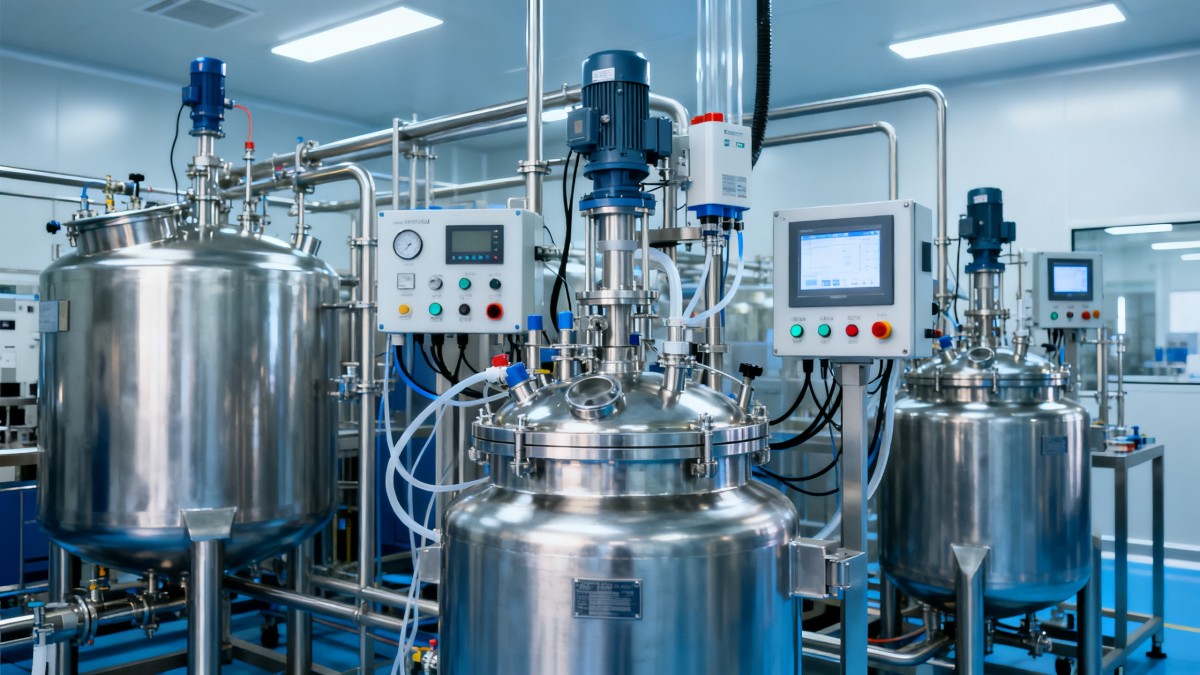
The most overlooked reason for scale-up failure is not simply “the biology changed.” It is that the lab process was never defined in a way that could survive transfer into larger equipment, different control architectures, and production constraints.
At small scale, teams can often compensate for weak process definition. Skilled scientists manually adjust feed timing, agitation, pH correction, sampling, or inoculation behavior. Analytical testing may happen with high attention and low throughput. Environmental variation may be limited. In this setting, a process can appear robust while actually depending on hidden operator knowledge and lab-specific conditions.
Once the process moves toward pilot or commercial manufacturing, those hidden supports disappear. Larger vessels have different hydrodynamics. Oxygen transfer changes. Heat transfer changes. Sensor response can lag. Sampling plans become stricter. GMP documentation expands. Raw material variability becomes more visible. Automation logic replaces hands-on intervention. If the original process understanding was incomplete, scale-up exposes it immediately.
That is why strong bench performance does not guarantee manufacturability. Scale-up succeeds when process knowledge is transferable, measurable, and linked to equipment reality.
What the target readers usually need to know first
Different stakeholders look at scale-up through different risks, but their concerns are closely connected:
- Operators and process users want stable runs, clear control limits, predictable troubleshooting, and less dependence on individual experience.
- Technical evaluators want to know whether the process is truly scalable, what parameters are critical, and where the engineering gaps sit.
- Procurement teams need confidence that selected bioprocessing equipment, analytical instruments, and automation systems fit process demands instead of only meeting headline specifications.
- Decision-makers care about time-to-market, batch failure risk, CAPEX/OPEX impact, compliance exposure, and long-term platform suitability.
- Quality and safety leaders focus on reproducibility, contamination risk, traceability, deviation reduction, and control strategy integrity.
- Project managers and engineering leads need process transfer clarity, realistic milestones, vendor coordination, and fewer surprises during tech transfer and commissioning.
So the real question behind the search is usually not just “why does scale-up fail?” It is “how can we identify the hidden cause early enough to prevent delays, quality losses, and poor investment decisions?”
The overlooked gap: process knowledge that does not travel across scales
The most damaging blind spot is unstructured process knowledge. This includes what is known, what is assumed, what is measured, and what is never captured.
Common examples include:
- Cell culture performance data collected without linking it to mixing or mass transfer conditions
- Analytical methods that work in development but are too slow, too variable, or too manual for manufacturing support
- Critical process parameters identified in theory but not tied to actual control capability at larger scale
- Lab equipment settings copied to production without understanding what physical effect those settings represent
- Raw material specifications that are broad enough to mask scale-sensitive variability
- Image, spectral, or sensor data generated during development but not integrated into decision-making during transfer
In other words, teams often transfer settings instead of transferring understanding. That is a major difference.
For example, an agitation speed used in a benchtop bioreactor is not a universal recipe value. What matters is the underlying process effect: mixing time, shear exposure, oxygen transfer, gas dispersion, and nutrient distribution. If teams move “150 rpm” from one scale to another without translating the physical meaning, they are not scaling up a process. They are copying a number.
Where scale-up problems usually appear first
Although every modality is different, most scale-up failures show up in a few repeatable areas:
1. Mass transfer and oxygen limitation
As vessel volume grows, oxygen transfer often becomes harder to maintain consistently. Cells that looked healthy at small scale may shift metabolism, reduce productivity, or generate unwanted byproducts when oxygen delivery changes.
2. Mixing and concentration gradients
Large systems can create local pH, dissolved gas, feed, or temperature gradients that simply did not exist in the lab. These gradients can alter cell behavior and product quality even when average readings appear acceptable.
3. Shear sensitivity and mechanical stress
Some cultures tolerate small-scale handling but respond differently to impeller design, gas flow, pumping, filtration, or hold steps at production scale.
4. Analytical blind spots
If analytical instruments are not sensitive, fast, or representative enough, teams may miss the real source of process drift until after batch quality is affected. This is especially important in bioprocessing environments that rely on off-line testing with long feedback cycles.
5. Control strategy mismatch
A process can seem stable in development because expert staff make constant adjustments. In manufacturing, that same process may fail if automation logic, sensor placement, or alarm strategies do not support equivalent control.
6. Raw material and supply chain variability
At larger scale, slight changes in media, buffers, single-use components, reagents, or filters can have amplified effects. Procurement decisions therefore directly influence process robustness.
How to tell whether your process is truly ready for scale-up
A scalable process is not just one with good yield at lab scale. It should meet several practical tests:
- Parameter clarity: You know which process parameters are critical, which are merely convenient, and which are not yet understood.
- Physical translation: You can explain settings in terms of engineering effect, not only recipe values.
- Analytical readiness: Your monitoring methods can support decisions at development, pilot, and production stages.
- Control realism: The process can be run within the actual sensor, automation, and equipment capabilities of the target facility.
- Raw material discipline: Inputs are specified tightly enough to prevent hidden variability.
- Transfer documentation: Tacit operator knowledge has been turned into explicit procedures, ranges, and response rules.
If several of these conditions are missing, scale-up risk is high even if small-scale data look promising.
Why analytical instruments and process monitoring matter more than many teams expect
Scale-up is often framed as a vessel or equipment problem, but it is equally an analytical visibility problem. You cannot control what you cannot observe clearly enough or quickly enough.
This is where laboratory technology, process analytics, imaging science, precision optics, and spectral analysis can create real value. Better measurement does not just improve reporting. It improves decisions.
Examples include:
- Using robust in-process monitoring to detect metabolic shifts before they become batch failures
- Applying spectral analysis to understand nutrient consumption or product formation patterns in near real time
- Leveraging imaging or microscopy tools to detect morphology changes linked to stress, aggregation, or viability issues
- Improving sensor qualification and calibration strategy so process trends are trustworthy across scales
- Reducing dependence on delayed off-line assays that arrive too late for corrective action
For GBLS readers working across laboratory equipment, IVD-related analytical workflows, and biopharmaceutical manufacturing, this point is essential: the path from scientific discovery to commercial application depends on whether analytical insight can travel with the process.
What management teams should evaluate before investing in scale-up equipment
For business and technical decision-makers, scale-up failure is often expensive because the wrong questions are asked too late. Instead of only comparing vessel size, automation brand, or purchase price, teams should assess whether the system supports process understanding and long-term operational control.
Key evaluation questions include:
- Can the equipment reproduce the critical physical conditions identified in development?
- How well do the sensors, software, and data systems support trend analysis and deviation investigation?
- Will the platform support future process intensification, new molecules, or different cell lines?
- What is the validation and compliance burden under the intended GMP environment?
- How dependent is successful operation on vendor-specific expertise or custom workarounds?
- Does the equipment integrate with existing analytical instruments, MES, historian, or quality systems?
- What are the cleaning, changeover, consumables, and maintenance implications?
This approach improves return on investment because it links procurement to process capability, not just asset acquisition.
Practical steps to reduce scale-up risk before tech transfer
Teams can significantly reduce failure rates by building scale-up readiness earlier in development. The most effective actions are usually operational rather than theoretical.
Define process intent, not just process settings
Document what each parameter is meant to achieve physically or biologically. This helps engineering and manufacturing teams preserve the right effect at larger scale.
Use representative scale-down models
Small-scale models should mimic likely large-scale stress conditions where possible, including mixing limitations, gas transfer differences, or feed variability.
Strengthen data integration
Bring together bioprocess data, analytical outputs, equipment logs, and operator observations. Important causes are often spread across disconnected systems.
Challenge assumptions early
Ask what parts of the process depend on expert intervention, ideal materials, or lab-only practices. These often become failure points in manufacturing.
Involve cross-functional teams sooner
Scale-up should not be owned by R&D alone. Manufacturing, quality, automation, validation, procurement, and analytical teams should all review readiness before transfer.
Translate tacit knowledge into executable instructions
If a process works because “an experienced scientist knows when the culture looks wrong,” that knowledge must be converted into measurable decision criteria.
How this applies across modern life science operations
The lesson goes beyond classic biopharmaceutical production. It is increasingly relevant anywhere precision biology meets real-world manufacturing and diagnostics.
In precision medicine, process inconsistency can affect therapeutic quality and patient access. In molecular diagnostics, poor transfer between development and scaled production can undermine assay reproducibility. In laboratory automation, disconnected instrument data can hide process drift. In imaging science and optical analysis, underused data can mean missed warning signals during development and QC.
Across these settings, the pattern is the same: innovation loses value when technical understanding does not scale with operations.
Conclusion: scale-up fails less from biology itself than from incomplete translation of knowledge
Bioprocessing scale-up often fails for one overlooked reason: the process was never fully translated from laboratory success into production reality. The missing link is usually not effort, but structured understanding across biology, equipment, analytics, control, and quality.
For organizations evaluating risk, investing in bioprocessing capacity, or managing process transfer, the best strategy is to stop treating scale-up as a late-stage handoff. It should be managed as an integrated knowledge system from development onward.
When teams connect laboratory technology, analytical instruments, process monitoring, engineering constraints, and operational decision-making early, scale-up becomes far more predictable. That means fewer surprises, stronger quality control, better use of capital, and a faster path from discovery to dependable production.
Get weekly intelligence in your inbox.
No noise. No sponsored content. Pure intelligence.
