
When precision optics limits imaging accuracy
When precision optics approaches its practical limits, imaging accuracy does not usually fail all at once. It degrades in ways that are easy to miss but costly to ignore: lower contrast, unstable measurements, spectral drift, poor reproducibility, and inconsistent diagnostic or analytical outcomes. For laboratories, manufacturers, and decision-makers, the real issue is not simply whether an optical system is “high precision,” but whether its optical limits are already constraining data quality, compliance confidence, throughput, and downstream decisions. In life sciences, IVD, pharmaceutical technology, and laboratory automation, that distinction matters.
For most readers evaluating imaging systems or troubleshooting performance, the key takeaway is straightforward: precision optics becomes a limiting factor when the optical chain can no longer support the biological, chemical, or regulatory sensitivity the application requires. At that point, software enhancement, operator skill, or process workarounds can only compensate so much. The better approach is to identify which optical constraint is dominant, quantify its impact on results, and decide whether recalibration, redesign, replacement, or process control is the most practical response.
Why precision optics becomes the bottleneck in imaging accuracy
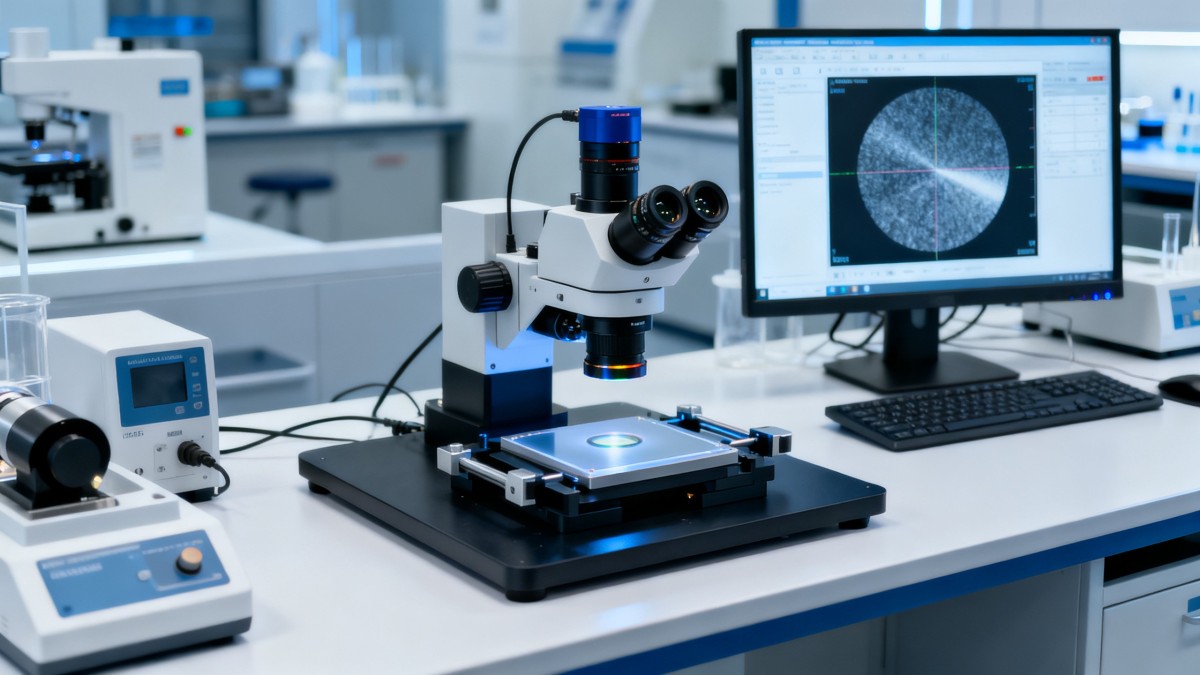
In many laboratory and industrial imaging workflows, users first blame sensors, software, sample prep, or operator variability when images become unreliable. But in reality, the optical path often sets the ceiling for achievable accuracy. Once that ceiling is reached, improvements elsewhere deliver diminishing returns.
Precision optics limits imaging accuracy because every stage of the optical system introduces trade-offs. These include:
- Resolution versus light throughput: Higher resolving power often comes with tighter alignment tolerances and lower tolerance for contamination or vibration.
- Field of view versus edge performance: Imaging a larger area can increase distortion, aberration, or non-uniform illumination.
- Spectral selectivity versus signal strength: In fluorescence, Raman, and spectral analysis, tighter filtering can improve specificity but reduce usable signal.
- Speed versus stability: High-throughput systems may sacrifice focus precision, exposure consistency, or thermal stability.
- Sensitivity versus noise control: The more an application pushes toward weak signals, the more optical scatter, flare, and transmission losses matter.
In practice, this means imaging systems in precision medicine, molecular diagnostics, and analytical instrumentation are often constrained not by a dramatic hardware failure, but by cumulative optical imperfections. These may be small individually, yet together they can shift a result from acceptable to questionable.
What optical limitations matter most in labs, IVD, and biopharma environments
Target readers across research, operations, procurement, and quality functions usually care less about abstract optical theory and more about which limitations affect real workflows. The most consequential constraints tend to be the following.
1. Aberrations that reduce measurement fidelity
Spherical aberration, chromatic aberration, astigmatism, coma, and field curvature all reduce image fidelity in different ways. In microscopy and spectral imaging, these effects can blur boundaries, distort shapes, and alter signal localization. That becomes especially problematic when users need to quantify cell morphology, identify weak biomarkers, or compare image-derived measurements across batches and sites.
2. Stray light and flare that corrupt low-signal detection
In fluorescence imaging, immunoassay readers, and spectroscopy-based systems, stray light can flatten contrast and contaminate weak signals. This directly affects limit of detection, dynamic range, and specificity. In IVD applications, that may influence the confidence of a borderline positive or negative result. In bioprocess monitoring, it can reduce trust in trend data.
3. Spectral drift and wavelength instability
For systems relying on filters, gratings, lasers, or multi-channel detectors, optical drift can shift the relationship between actual sample behavior and reported output. This is particularly important in spectral analysis, multiplex assays, and any environment where lot-to-lot or site-to-site reproducibility matters.
4. Focus instability and depth-related errors
Autofocus limitations, thermal expansion, stage vibration, and sample-induced refractive mismatch can all reduce consistency. In automated scanning or high-content imaging, even slight focus variation across wells or slides can create false biological differences that are actually optical artifacts.
5. Transmission losses through the optical chain
Every lens, mirror, filter, window, and coupling interface reduces transmission to some extent. In low-light applications, those cumulative losses can force longer exposure times, higher illumination intensity, or more aggressive signal processing, each of which introduces new risks such as photobleaching, thermal load, or algorithmic bias.
How optical limits show up as business and operational problems
For enterprise decision-makers and technical evaluators, the question is not only “What is the optical defect?” but “What does it cost us?” This is where imaging accuracy becomes a management issue, not just an engineering one.
When precision optics reaches its limits, organizations often experience:
- Higher repeat rates due to failed scans, inconclusive results, or poor image quality
- Slower throughput from manual refocusing, recalibration, troubleshooting, or data review
- Reduced reproducibility across instruments, operators, locations, or production lots
- Compliance risk when measurement uncertainty is not well characterized or documented
- Procurement inefficiency when systems are selected by headline specs rather than application-fit performance
- Quality disputes between operations, QA, engineering, and vendors over the true cause of inconsistent data
In regulated settings such as pharmaceutical technology, GMP-related environments, and clinical diagnostics, these consequences can extend well beyond technical inconvenience. They can affect validation timelines, audit readiness, release confidence, CAPA workload, and customer trust.
How to tell whether imaging problems are caused by optics, not software or sample prep
This is one of the most important practical questions for operators, quality teams, and project leads. Imaging errors are often multi-factorial, but there are recognizable signs that optics is the limiting factor.
Consider optics as a primary suspect when you see:
- Consistent image degradation at the edges of the field
- Performance differences between channels or wavelengths
- Stable software settings but variable image contrast or sharpness
- Worse results under low-light or weak-signal conditions
- Instrument-to-instrument variation despite standardized sample prep
- Calibration drift that returns after temporary adjustment
- Apparent biological variation that correlates with scan position, temperature, or exposure conditions
A useful diagnostic sequence is:
- Verify the sample and prep variables first to rule out staining, concentration, mounting, or contamination issues.
- Check illumination stability and detector performance to avoid misattributing source or sensor problems to optics.
- Run reference standards such as resolution targets, fluorescence standards, or wavelength calibration materials.
- Map image quality across the field to identify edge distortion, field curvature, or non-uniformity.
- Compare channels and operating modes to pinpoint spectral or filter-related issues.
- Test under controlled thermal and vibration conditions if performance changes over time or across shifts.
This structured approach helps organizations avoid a common mistake: buying a new software package or retraining staff when the real bottleneck lies in the optical architecture itself.
Which applications are most vulnerable to precision optics limits
Not all workflows are equally sensitive. Some can tolerate modest optical imperfections. Others cannot.
Molecular diagnostics and IVD
Assays that depend on weak fluorescence, multiplex labeling, or precise thresholding are highly sensitive to spectral crosstalk, stray light, and calibration drift. In these contexts, optical limitations can influence clinical decision support quality and assay consistency.
Microscopy for cell and tissue analysis
High-resolution imaging for morphology, localization, and quantification depends heavily on aberration control, focus stability, and uniform illumination. Even small optical shortcomings can distort biological interpretation.
Spectral analysis and chemical characterization
Instruments used for Raman, absorption, or other spectral methods rely on wavelength precision and optical stability. Limits in optics can directly undermine material identification, impurity assessment, or process analytics.
Bioprocess monitoring and automated laboratory systems
When imaging is embedded in continuous or semi-automated workflows, optical instability creates a scaling problem. A minor accuracy issue repeated across hundreds or thousands of samples becomes a significant operational and financial burden.
Pharmaceutical inspection and quality control
Visual inspection, particulate analysis, packaging verification, and related imaging tasks require repeatability under validated conditions. Optical limitations increase false rejects, missed defects, and documentation complexity.
How buyers and evaluators should assess an imaging system beyond headline specifications
One of the biggest procurement risks is overreliance on catalog metrics such as nominal resolution, magnification, or megapixels. These are useful, but they rarely predict application-level performance on their own.
Technical evaluators and procurement teams should ask:
- What is the proven performance under our actual sample conditions?
- How stable is the optical system over time, temperature, and throughput load?
- What is the measured uniformity across the full field of view?
- How is spectral accuracy validated and maintained?
- What reference standards and recalibration procedures are supported?
- What are the maintenance sensitivities for alignment, contamination, and vibration?
- Can the vendor provide reproducibility data across multiple installed systems?
For decision-makers, the stronger question is not “Is this the highest-spec optical system?” but “Is this the most reliable optical system for our required sensitivity, compliance burden, and throughput model?” That framing leads to better investment decisions.
What can be done when precision optics is already limiting performance
The right response depends on whether the limitation is fundamental, environmental, or maintenance-related.
Improve control of the operating environment
Vibration isolation, thermal stabilization, dust control, and illumination management can significantly improve optical consistency. In many labs, environmental instability amplifies existing optical weaknesses.
Strengthen calibration and verification routines
Routine use of imaging standards, wavelength checks, and field uniformity verification helps identify drift before it affects critical data. This is especially valuable in regulated or multi-site environments.
Match optics more tightly to the application
General-purpose configurations often underperform in demanding workflows. The right objective, filter set, illumination path, detector pairing, or spectral design can make more difference than incremental software enhancement.
Reduce dependence on post-processing as a substitute for optical quality
Image processing can improve usability, but it should not be used to hide weak optical performance in critical measurement tasks. Overcorrection can reduce transparency and complicate validation.
Plan replacement based on risk, not age alone
An older optical system may still be fit for purpose, while a newer one may be inappropriate for a more demanding assay. Replacement planning should be based on data quality impact, downtime burden, serviceability, and application evolution.
What “good enough” looks like depends on the decision the image must support
This is often the most overlooked principle. Imaging accuracy should not be judged in isolation. It should be judged against the decision the image enables.
If the image is used for basic visualization, moderate optical limitations may be acceptable. If it supports quantitative biomarker assessment, release testing, automated classification, or regulated reporting, the tolerance is much lower. In other words, precision optics becomes limiting not at a universal threshold, but at the point where uncertainty in the optical system threatens the integrity of the decision.
That is why the most mature organizations define imaging requirements from the top down:
- What decision depends on the image?
- What uncertainty can the process tolerate?
- Which optical variables contribute most to that uncertainty?
- How will those variables be monitored and controlled?
This approach aligns scientists, operators, QA teams, procurement, and executives around the same performance logic.
Conclusion: precision optics sets the ceiling, so evaluate it where it matters most
When precision optics limits imaging accuracy, the consequences extend far beyond image appearance. They affect measurement confidence, reproducibility, assay sensitivity, workflow efficiency, compliance readiness, and investment outcomes. For laboratories and life science organizations, the practical question is not whether optical limits exist; every system has them. The real question is whether those limits are already interfering with the level of accuracy your application requires.
The most effective response is to evaluate optical performance in the context of real use: real samples, real throughput, real environmental conditions, and real decision risk. When organizations do that well, they make better choices in system design, vendor selection, maintenance planning, and quality management. And in precision medicine, diagnostics, and scientific discovery, that is where imaging value becomes measurable.
Get weekly intelligence in your inbox.
No noise. No sponsored content. Pure intelligence.
