
What causes spectral analysis results to drift over time?
Spectral analysis results can drift over time due to instrument aging, environmental fluctuations, calibration instability, sample variation, and operator practices. In laboratory technology and precision optics, even small shifts can affect analytical instruments, imaging science, molecular diagnostics, and precision medicine decisions. Understanding these causes helps users, evaluators, and decision-makers protect scientific discovery, improve data reliability, and reduce risk across pharmaceutical technology and bioprocessing workflows.
Why do spectral analysis results drift over time in real laboratory operations?
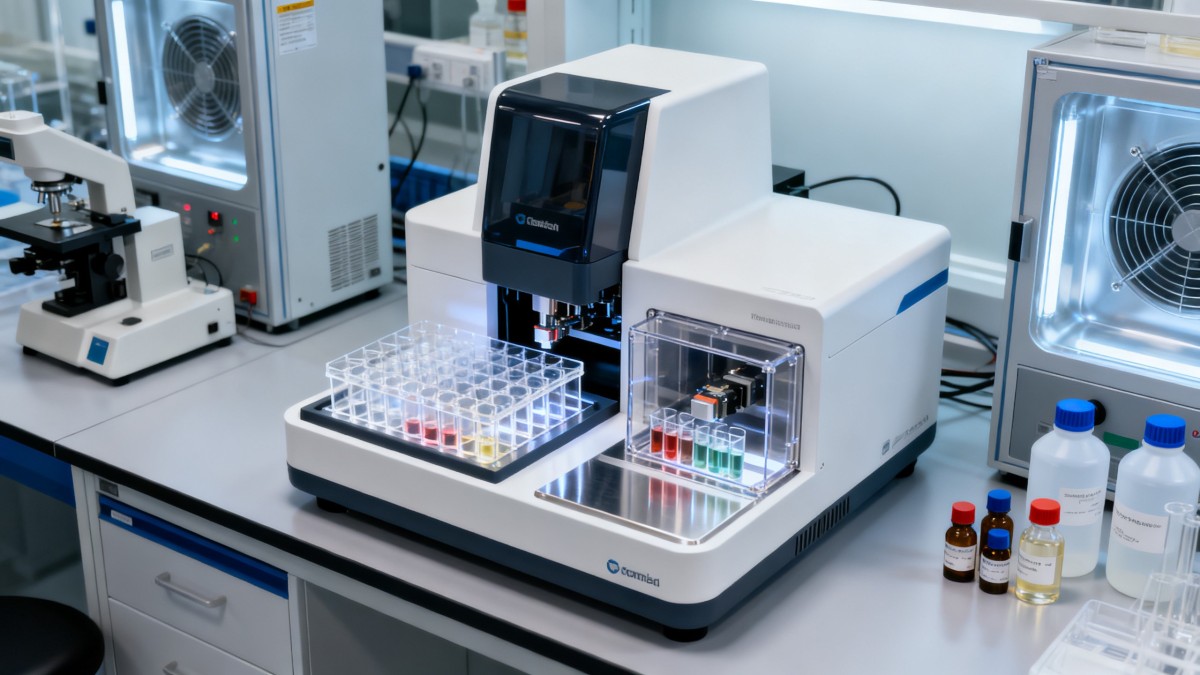
Spectral drift is not a single fault. In most laboratories, it develops gradually through the combined effect of optics, electronics, software baselines, sample handling, and environmental exposure. For operators and quality teams, the challenge is that drift often appears first as a small deviation in peak position, intensity, or background noise before it becomes a visible analytical failure.
In life sciences, IVD, and pharmaceutical R&D settings, even a minor wavelength shift or baseline movement can alter trending decisions, release checks, imaging interpretation, or method comparability. A drift issue that seems manageable in a research lab can create larger consequences when methods are transferred across 2–4 sites, scaled into regulated workflows, or used in continuous monitoring.
The main causes usually fall into 5 core groups: instrument aging, environmental instability, calibration problems, sample-related variation, and human or procedural inconsistency. Each group affects spectral analysis in a different way. Some change the instrument response over 6–12 months, while others can cause variation within a single shift or even during a 2–8 hour run.
For procurement teams and technical evaluators, the key point is practical: drift is not only a maintenance topic. It is also a total cost, compliance, and workflow design issue. If drift is ignored during equipment selection, the hidden cost may appear later in repeated calibration, batch delays, failed comparability checks, more frequent service visits, and lower confidence in decision-critical data.
The 5 most common drift sources
- Optical component aging, such as lamp intensity loss, detector sensitivity changes, filter degradation, and mirror contamination, which slowly alter signal quality over time.
- Environmental shifts, especially temperature changes of 2°C–5°C, humidity variation, airflow disturbance, mechanical vibration, and unstable power input.
- Calibration instability caused by irregular calibration intervals, unsuitable standards, poor traceability practices, or software compensation that no longer matches actual hardware condition.
- Sample and matrix variation, including concentration changes, turbidity, pathlength inconsistency, reagent lot differences, and contamination in cuvettes or sample interfaces.
- Operator and SOP factors, such as warm-up time not being respected, incorrect cleaning sequence, misaligned accessories, and inconsistent background correction procedures.
Teams that manage spectral analysis successfully usually treat drift as a system problem rather than a device-only problem. That approach is especially relevant for organizations working across laboratory automation, precision screening, and imaging workflows, where instrument behavior, software settings, and user discipline must remain aligned.
Which components and operating conditions affect spectral stability the most?
Not every component contributes equally to spectral analysis drift. In practice, three areas deserve closer attention during troubleshooting and purchasing: the light source and detector path, the environmental control around the instrument, and the repeatability of the sample presentation system. If any of these three areas is unstable, the analytical trend can shift even when the software still reports acceptable operation.
Light sources often show gradual output decay across their service life. Detectors can also change sensitivity due to aging or thermal behavior. In high-resolution or low-signal applications, a small change in signal-to-noise ratio can be enough to trigger measurable baseline drift. Many laboratories therefore check reference materials weekly or monthly instead of waiting for a formal annual recalibration.
Environmental sensitivity is often underestimated during installation. A room that varies between 20°C and 28°C during the day, or one exposed to direct ventilation drafts, may produce unstable spectra even if the instrument meets specification. For precision optics and imaging science, vibration from nearby pumps, centrifuges, or foot traffic can also affect reproducibility during longer acquisitions.
Sample presentation is another frequent weakness. The same method can perform differently when transferred from manual cuvette loading to autosampler use, from one reagent lot to another, or from clarified to more turbid matrices. For bioprocessing and diagnostics workflows, matrix complexity makes consistent handling just as important as instrument performance.
Technical checkpoints that deserve routine review
The table below summarizes common drift drivers and what teams should monitor during routine operation, qualification, or supplier evaluation. It is useful for users, quality managers, and project owners comparing spectral analysis systems for research, IVD support, or pharmaceutical workflows.
A useful pattern emerges from this comparison: the most disruptive spectral analysis drift usually happens at interfaces, not in isolation. The interface may be between source and detector, instrument and room, software and calibration file, or sample and accessory. That is why corrective action works best when teams review the full chain instead of replacing parts one by one.
A practical 4-step review sequence
- Confirm whether the drift is time-based, sample-based, or operator-based by reviewing 2–8 weeks of trend data.
- Check environmental logs and maintenance records before changing method parameters.
- Run a stable reference or certified standard through the same workflow used for actual samples.
- Escalate to alignment, service, or recalibration only after ruling out sample handling and SOP variation.
This sequence helps avoid a common mistake: changing the analytical method before proving whether the underlying problem comes from instrument condition, environment, or sample preparation. For regulated or high-consequence workflows, that discipline protects both data integrity and change-control efficiency.
How should buyers and technical evaluators assess drift risk before procurement?
Procurement decisions often focus on resolution, throughput, and upfront price. Those factors matter, but they do not fully explain long-term spectral analysis reliability. Buyers should also evaluate how the system behaves after 3 months, 12 months, and repeated calibration cycles. A lower-priced instrument can become more expensive if it demands frequent service intervention or tight environmental conditions that the site cannot maintain.
For distributors, project managers, and enterprise decision-makers, drift risk should be translated into business language. Ask how much downtime is acceptable per quarter, how many reference checks are required per month, and whether the site can support controlled temperature, preventive maintenance, and staff retraining. These factors influence total ownership cost more than brochure specifications alone.
In laboratory equipment, IVD support, and biopharma settings, the most useful procurement model often includes 3 layers: technical fit, operational fit, and compliance fit. Technical fit addresses wavelength range, detector type, and repeatability. Operational fit covers room conditions, staff capability, and service access. Compliance fit considers documentation, traceability, and qualification support.
Organizations that source through global teams should also examine method transfer resilience. If spectral analysis systems will be used across multiple sites, the chosen platform should support comparable calibration routines, clear service intervals, and stable accessory configurations. Otherwise, cross-site variation may be mistaken for process variation.
Procurement criteria that reduce hidden drift cost
The following table is designed for technical evaluations, RFQ discussions, and internal purchasing reviews. It compares what to ask suppliers when spectral analysis stability is a priority rather than an afterthought.
This comparison helps shift the conversation from “Which instrument performs best on day one?” to “Which solution remains defensible across the full operating lifecycle?” That distinction is essential for procurement personnel and decision-makers who need both technical credibility and budget accountability.
A 5-point buyer checklist
- Verify whether the instrument requires a controlled room window such as 20°C–25°C for stable routine use.
- Ask for recommended preventive maintenance intervals, typically quarterly, semiannual, or annual depending on use intensity.
- Review consumable and replacement part lead times, especially for lamps, detectors, and optical accessories.
- Confirm whether the software supports trend logging, audit trails, and calibration history review.
- Assess whether site staff can execute daily and weekly verification tasks without heavy dependence on external service.
When these 5 points are reviewed early, organizations reduce the risk of buying a system that looks attractive in specification sheets but performs poorly under actual laboratory conditions. This is especially important when timelines are tight and method downtime could delay product release or project milestones.
What operating practices help prevent spectral analysis drift in daily use?
Daily discipline remains one of the strongest defenses against spectral analysis drift. Even well-designed instruments can produce unstable results when warm-up procedures, blank preparation, accessory cleaning, and reference checks are inconsistent. For routine users, the goal is not perfection; it is repeatability across shifts, operators, and sample lots.
A practical control approach usually combines daily checks, weekly review, and scheduled preventive maintenance. Daily checks may include baseline inspection, blank confirmation, and reference reading. Weekly review often focuses on trend charts and environmental records. Maintenance actions are then planned by runtime, operating hours, or supplier recommendations rather than only after failure occurs.
For quality and safety managers, drift prevention also connects to documentation quality. If deviations are recorded with poor detail, recurring root causes remain hidden. If records clearly identify sample lot, operator, room condition, and instrument status, the team can often distinguish whether the drift came from optics, environment, or handling within 1–3 review cycles.
In advanced laboratory environments, drift control should be integrated into SOP design and onboarding. That means new staff are trained not only on how to run the instrument, but also on what warning signs to report, when to stop testing, and how to escalate unusual trends before they affect larger data sets.
Routine practices that create measurable stability
- Allow the instrument to complete the supplier-recommended warm-up period before acquisition, especially for sensitive optical systems.
- Use the same reference material and blank preparation logic across operators and shifts to limit procedural variance.
- Log room temperature, humidity, and any nearby equipment changes when unexplained drift appears over several days.
- Inspect accessories, cuvettes, probes, and sample interfaces for residue, scratches, or alignment changes at defined intervals.
- Trend baseline, peak position, and intensity behavior over time instead of reviewing only pass/fail outcomes.
Common misconceptions that increase drift risk
One common misconception is that passing a single calibration means the system is stable. In reality, calibration is only one snapshot. Drift may still develop between calibration points, especially when the instrument operates for long hours, runs complex matrices, or sits in a room with changing conditions.
Another misconception is that software correction can solve every stability issue. Software can help with compensation and traceability, but it cannot fully correct physical contamination, thermal instability, or poor sample presentation. Overreliance on correction algorithms may delay the identification of hardware or procedural problems.
A third misconception is that drift only matters in highly regulated environments. That is not true. In research, imaging, assay development, and distributor demonstrations, unstable spectra can still lead to wrong comparisons, poor customer confidence, and slower technology adoption. Reliable spectral analysis supports both scientific integrity and commercial credibility.
FAQ: what should teams know before troubleshooting or upgrading?
The questions below reflect common concerns from information researchers, users, technical evaluators, procurement personnel, and project leaders who need a more practical view of spectral analysis drift. These answers are especially relevant when workflows span laboratory equipment, diagnostics support, and precision optics.
How often should spectral analysis systems be checked for drift?
The right interval depends on workload, matrix complexity, and decision impact. In many laboratories, a daily quick verification plus a weekly or monthly trend review is more useful than relying only on an annual service event. High-use systems, multi-shift operations, or instruments supporting release-critical work may justify tighter monitoring and more frequent reference checks.
Can environmental control really change analytical results that much?
Yes. Temperature movement of several degrees, local airflow, vibration, and power instability can all influence spectral analysis, especially in sensitive optical and imaging systems. If a lab cannot maintain stable room conditions, the procurement and validation strategy should account for that limitation before implementation starts.
When is recalibration enough, and when is service needed?
Recalibration is appropriate when the hardware is sound but the analytical response has shifted within a correctable range. Service is more likely needed when drift is accompanied by rising noise, unstable intensity, alignment suspicion, repeated failures after recalibration, or visible contamination and wear. Reviewing 2–3 cycles of historical trend data helps distinguish the two cases.
What should distributors and resellers emphasize to customers?
They should discuss operating conditions, maintenance expectations, calibration workflow, accessory care, and training requirements before focusing only on specifications. Customers value clear guidance on installation readiness, service intervals, and application fit because those factors directly affect whether spectral analysis results remain reliable over time.
Why choose GBLS when evaluating spectral analysis stability and laboratory solutions?
GBLS brings together laboratory technology insight, precision optics awareness, IVD context, and pharmaceutical workflow understanding in one decision-oriented perspective. That matters because spectral analysis drift is rarely isolated to one discipline. It sits at the intersection of instrument engineering, sample science, quality control, compliance expectations, and commercial execution.
For organizations comparing systems, reviewing suppliers, or planning upgrades, GBLS helps frame the right questions before cost and risk increase. Our value is not limited to product information. We support deeper evaluation around application fit, maintenance burden, calibration logic, laboratory environment readiness, and the practical implications for precision medicine, imaging science, and bioprocess workflows.
If your team is assessing spectral analysis drift risk, you can consult GBLS on several concrete topics: parameter confirmation for your workflow, solution comparison across different instrument types, expected delivery and implementation windows, maintenance and service planning, documentation and compliance expectations, sample handling considerations, and quotation discussions aligned with real operating conditions.
This approach is useful for information researchers seeking clarity, operators trying to stabilize results, evaluators building technical comparisons, procurement teams managing budget pressure, and enterprise leaders balancing scientific rigor with commercial timelines. In a market where precision supports discovery and decisions, clearer drift control leads to stronger laboratory value.
What you can discuss with us next
- Whether your current spectral analysis issue is more likely caused by environment, calibration, sample handling, or instrument aging.
- Which technical parameters and accessories should be prioritized for your lab, diagnostics, imaging, or biopharma application.
- How to compare solutions for lifecycle stability, not only day-one performance or purchase price.
- What implementation checkpoints, service intervals, and documentation steps should be planned before procurement or upgrade.
If you are preparing a new purchase, troubleshooting drift, or mapping a multi-site laboratory strategy, GBLS can help you turn scattered technical questions into a clearer evaluation path. That means more confident selection, more reliable spectral analysis results, and fewer avoidable delays across the full discovery-to-application chain.
Get weekly intelligence in your inbox.
No noise. No sponsored content. Pure intelligence.
